Back to All Research
PRCA + Kano evidence summary

What Hotel Guests Penalize and Reward Most in Vietnam Booking Reviews

From 97,014 reviews, this page shows which service issues hurt ratings most and which upgrades help only after basics are stable.

  • PeriodJan 2023 - Jan 2025
  • SourceBooking.com Vietnam
  • Sample97,014 reviews
  • ModelRegression with robust errors (R2 = 0.220)
Core Findings

PRCA asymmetry summary

  • Penalty means score loss when an attribute fails. In this study, penalties are stronger than rewards.
  • Cleanliness is the top must-not-fail factor.
  • Staff service is the strongest upside lever when executed well (+0.680 reward coefficient).
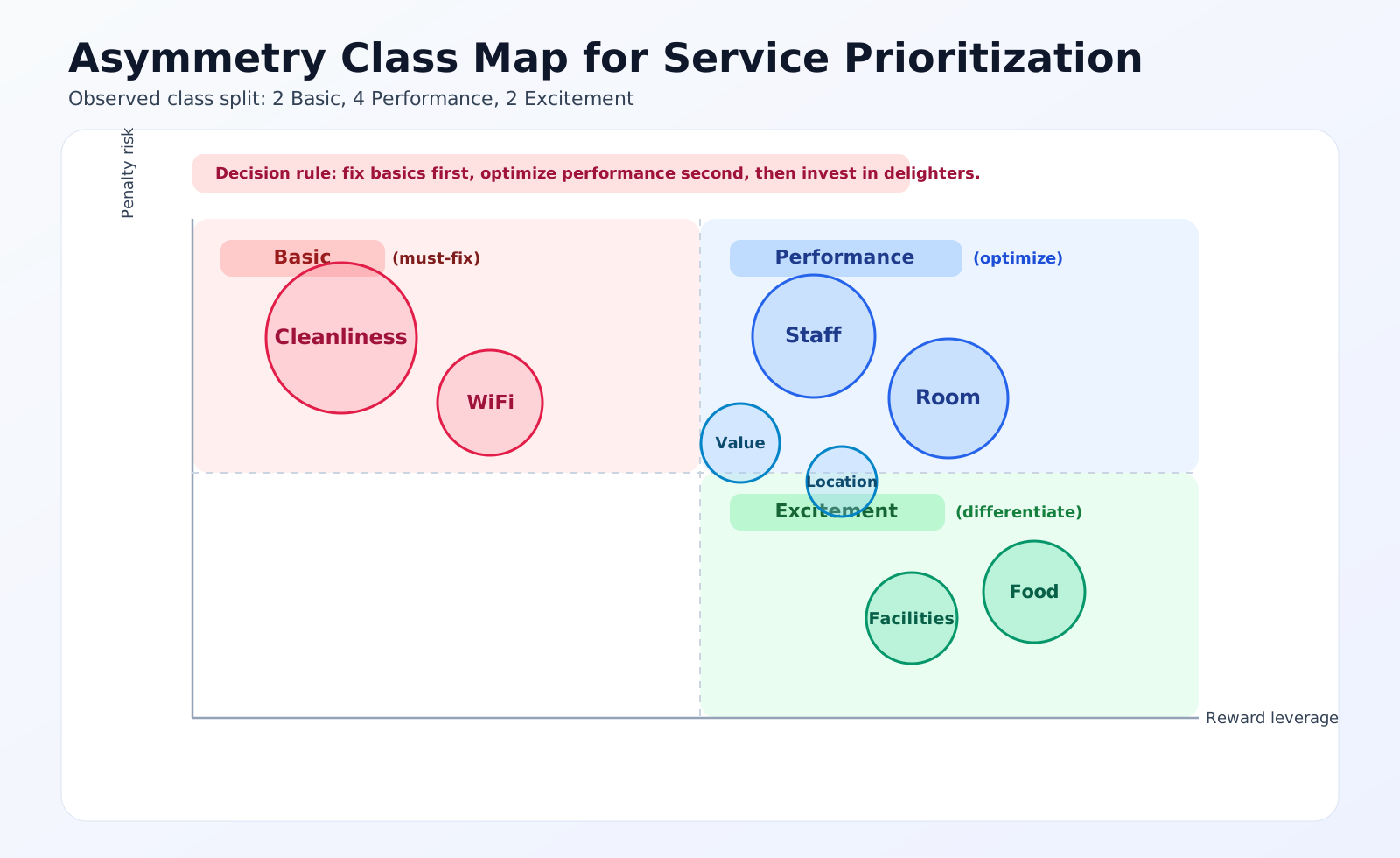
  • Attribute types: 2 Basics, 4 Performance drivers, 2 Delighters.

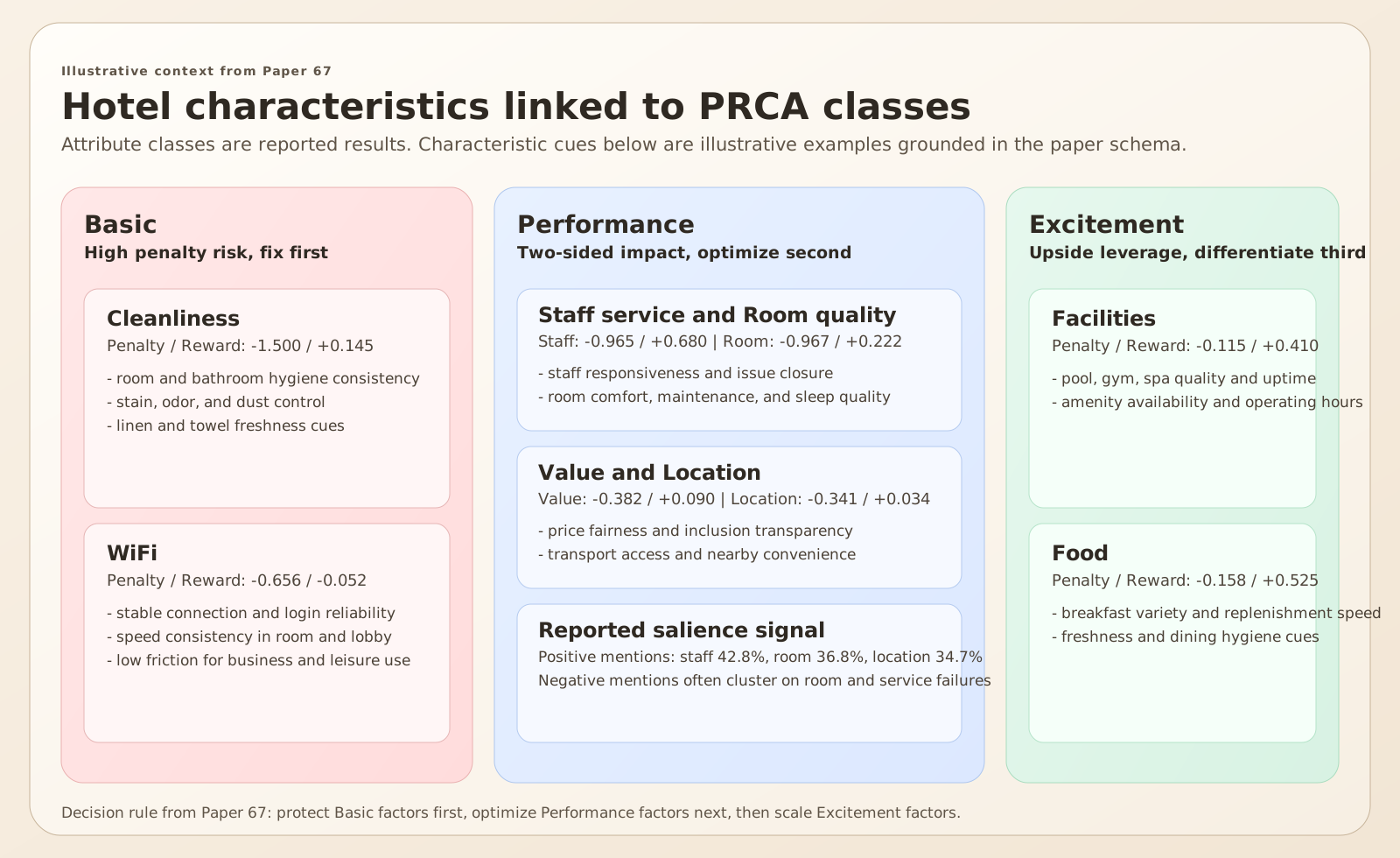
Class definitions: Basic means strong downside risk when failing, Performance means two-sided impact, and Excitement means upside differentiation after operational basics are stable.

Source note: coefficients and class assignment are reported outputs from Paper 67 visualized in this page.
Authors: Chung Hy Dai, Anh Minh Hoang

Contact: hmianh2504@gmail.com

Core Metrics
  • Sample size

    97,014

  • Approx. hotels

    ~1,000

  • Average guest score

    8.83 / 10

  • Share of perfect 10 scores

    49.2%

  • Model explanatory power

    22.0% (R2 = 0.220)

  • Uncertainty check

    Robust standard errors (HC1)

  • Attribute type split

    2 Basics / 4 Performance / 2 Delighters

  • Strongest upside driver

    Staff +0.680

Visualization

Reported Coefficient Visuals

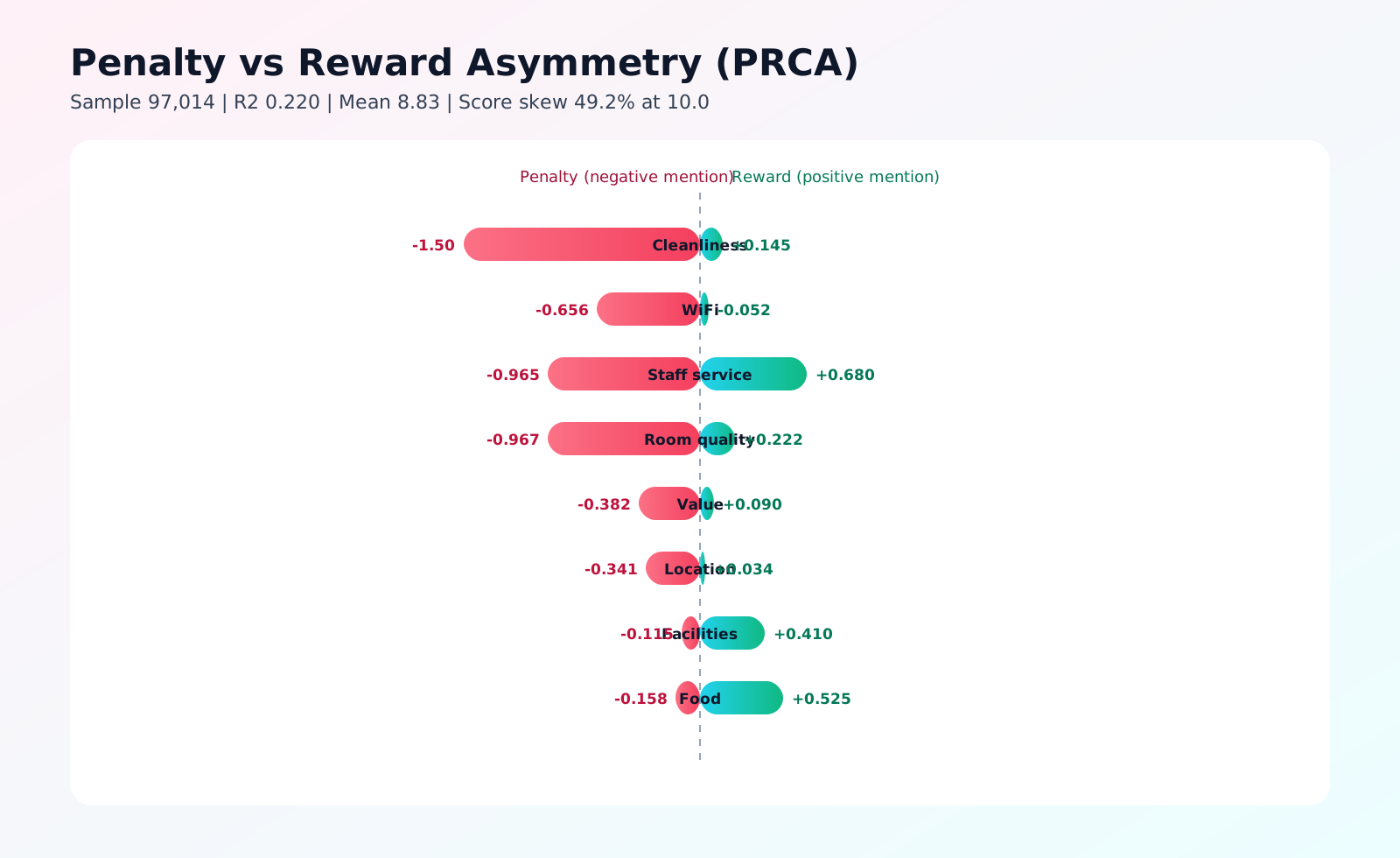
Left chart reports penalty and reward effect sizes by attribute. Right chart reports the asymmetry class map used for service sequencing.

Mirrored penalty and reward coefficients for eight hotel attributes
Penalty (left) and reward (right) coefficients by attribute; larger absolute values indicate stronger score influence.
Asymmetry class map for Basic, Performance, and Excitement attributes
Asymmetry class map showing Basic, Performance, and Excitement zones.
Method in Plain Steps

How the analysis was built

Method execution steps

Data collection

Collected Booking.com reviews and removed duplicates, resulting in 97,014 usable records.

Language standardization

Used NLLB-200 to translate and standardize multilingual reviews into one analysis-ready format.

Attribute mapping

Used Sentence-BERT to map text into 8 service attributes (reported proxy precision up to 0.92).

Polarity construction

Separated positive and negative statements to estimate gains and losses independently.

PRCA + Kano classification

Estimated penalty/reward effects with robust regression, then grouped attributes into 2 Basics, 4 Performance drivers, and 2 Delighters.

Attribute Interpretation

Comprehensive Interpretation of Hotel Attributes

This panel translates the reported coefficients into operational meaning. Penalty bars show downside risk when performance fails; reward bars show upside potential when performance excels.

Basic class: failure prevention first

  • Cleanliness (-1.500 / +0.145) is the highest downside driver. Hygiene failures erase rating equity faster than upgrades can recover it.
  • WiFi (-0.656 / -0.052) behaves as a strict hygiene factor: unreliable internet hurts scores and does not create upside when merely acceptable.
  • Operational reading: set non-negotiable baseline controls before funding premium features.

Performance class: optimize for consistency

  • Staff (-0.965 / +0.680) is the strongest upside lever with substantial failure risk.
  • Room (-0.967 / +0.222) carries almost the same downside as Staff but lower upside, so execution quality must stay stable.
  • Value (-0.382 / +0.090) and Location (-0.341 / +0.034) are moderate levers that protect perceived fairness and convenience.

Excitement class: differentiate after stabilization

  • Food (-0.158 / +0.525) and Facilities (-0.115 / +0.410) have low downside but strong upside.
  • These attributes are useful for premium differentiation once basic reliability is already controlled.
  • Operational reading: gate delighter investment behind stable Basic and Performance KPIs.
Decision Rules

Practical Fix Order for Managers

Protect Basics

Stabilize high-penalty factors first.

Optimize Performance

Improve staff, room, value, and location next.

Differentiate with Delighters

Invest in facilities and food last.

Coefficient format: penalty / reward. More negative penalty means stronger score damage when that attribute fails.

  • Cleanliness-1.500 / +0.145
  • WiFi-0.656 / -0.052
  • Staff service-0.965 / +0.680
  • Room quality-0.967 / +0.222
  • Value-0.382 / +0.090
  • Location-0.341 / +0.034
  • Facilities-0.115 / +0.410
  • Food-0.158 / +0.525

Managerial Implications

Pass 1

Treat cleanliness and WiFi as non-negotiables. Cleanliness has the steepest penalty (-1.500), and WiFi shows no real upside when only "acceptable" (-0.656 / -0.052).

Pass 2

After basics are stable, standardize staff and room delivery. Staff is the strongest upside lever (+0.680), while room quality still carries high downside risk (-0.967).

Pass 3

Use food and facilities as targeted differentiators last. They carry lower penalty risk but strong reward potential (Food +0.525, Facilities +0.410).

If Extending the Research

Ground-truth check for text labels

Manually annotate a review subset for attribute and sentiment labels, then report precision/recall so the NLP mapping can be audited against human coding.

Quarterly re-estimation

Re-estimate PRCA by quarter (or rolling windows) to verify whether class assignments stay stable across seasonality and market shifts.

Replication in another destination

Run the same pipeline in at least one comparable city using the same preprocessing and model settings to test transferability.

Action-to-outcome linkage

Track intervention dates (e.g., housekeeping SOP changes, staff training) and compare before/after shifts in ratings and attribute mentions.

Working rule: protect basics every day, review penalty signals monthly, rerank priorities quarterly, and fund delighters only after basic complaints remain low.