RQ1
Which antecedent constructs most strongly contribute to consumer engagement quality (CE) in UGC influencer campaigns?
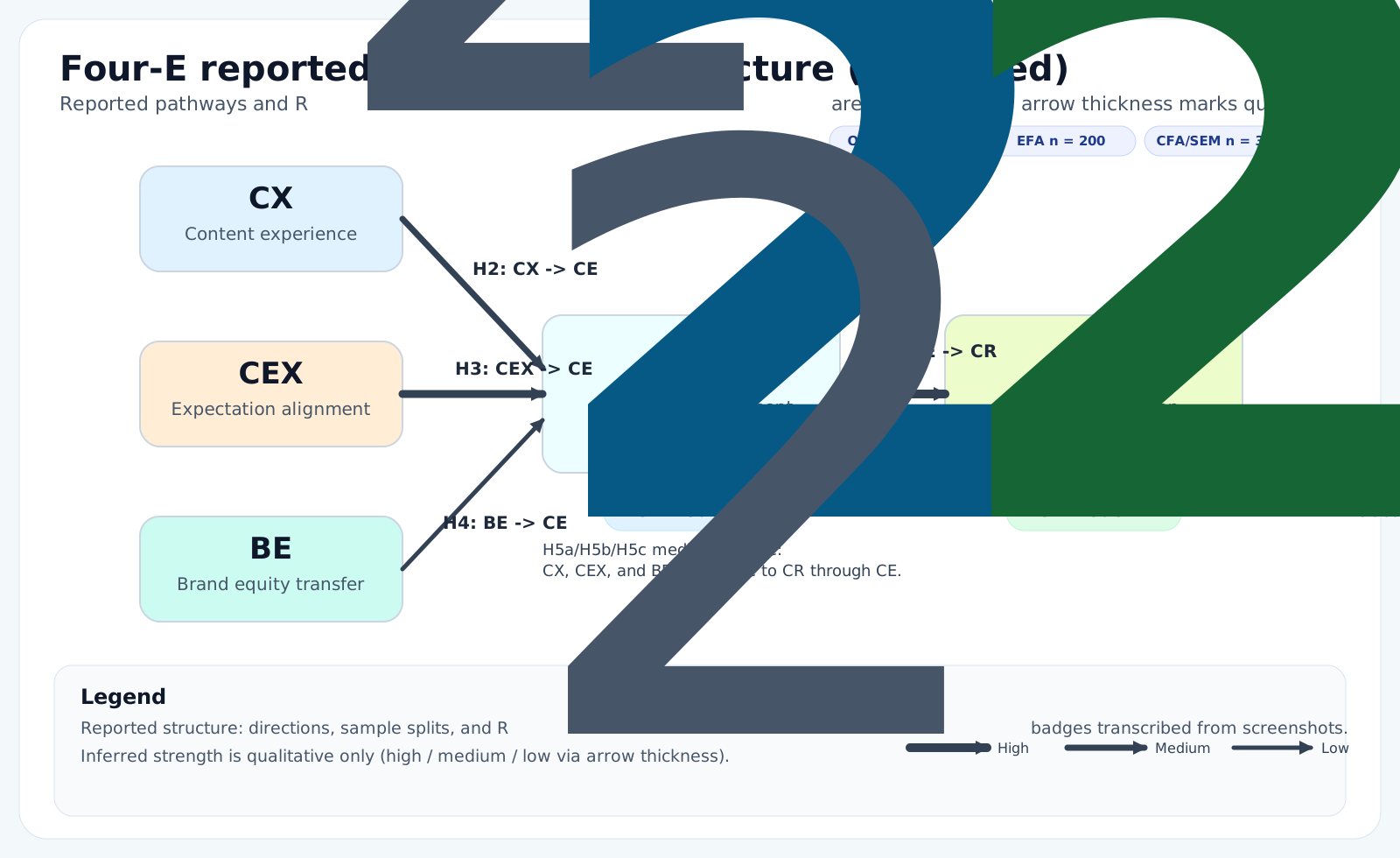
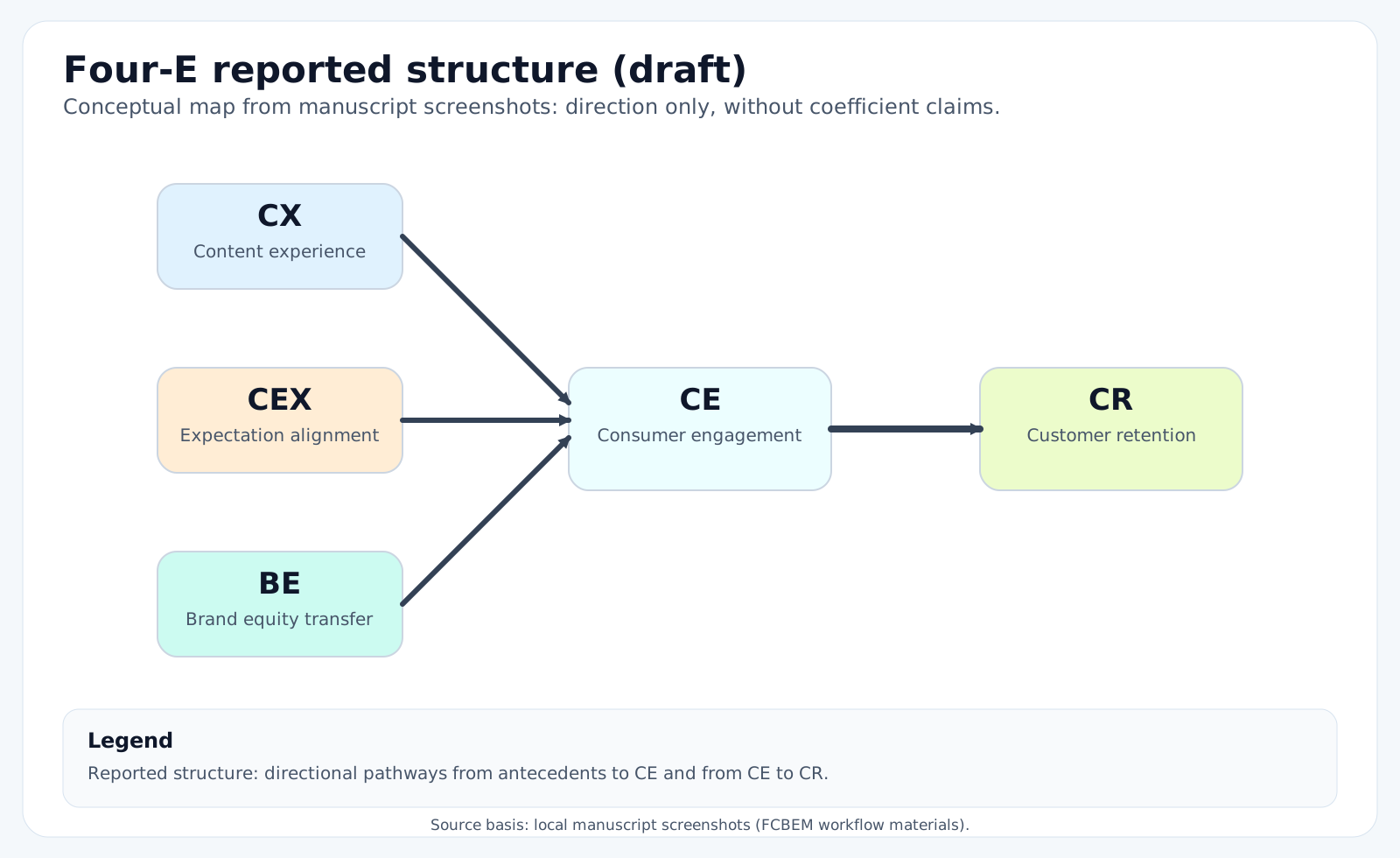
This manuscript-aligned page summarizes a UGC influencer study in Vietnam using the Four-E construct logic (CX, CEX, BE, CE) and split-sample validation. The model is estimated with EFA and CFA/SEM (overall n = 565; EFA n = 200; CFA/SEM n = 365), with retention explained primarily through engagement quality.
Influencer campaigns on UGC platforms often optimize reach metrics before clarifying how trust, experience, and expectation matching translate into retention. The study addresses this gap by testing a structured Four-E logic and by positioning engagement quality as the central bridge between exposure and return behavior.
Which antecedent constructs most strongly contribute to consumer engagement quality (CE) in UGC influencer campaigns?
Does CE act as the direct pathway to customer retention (CR) after influencer exposure?
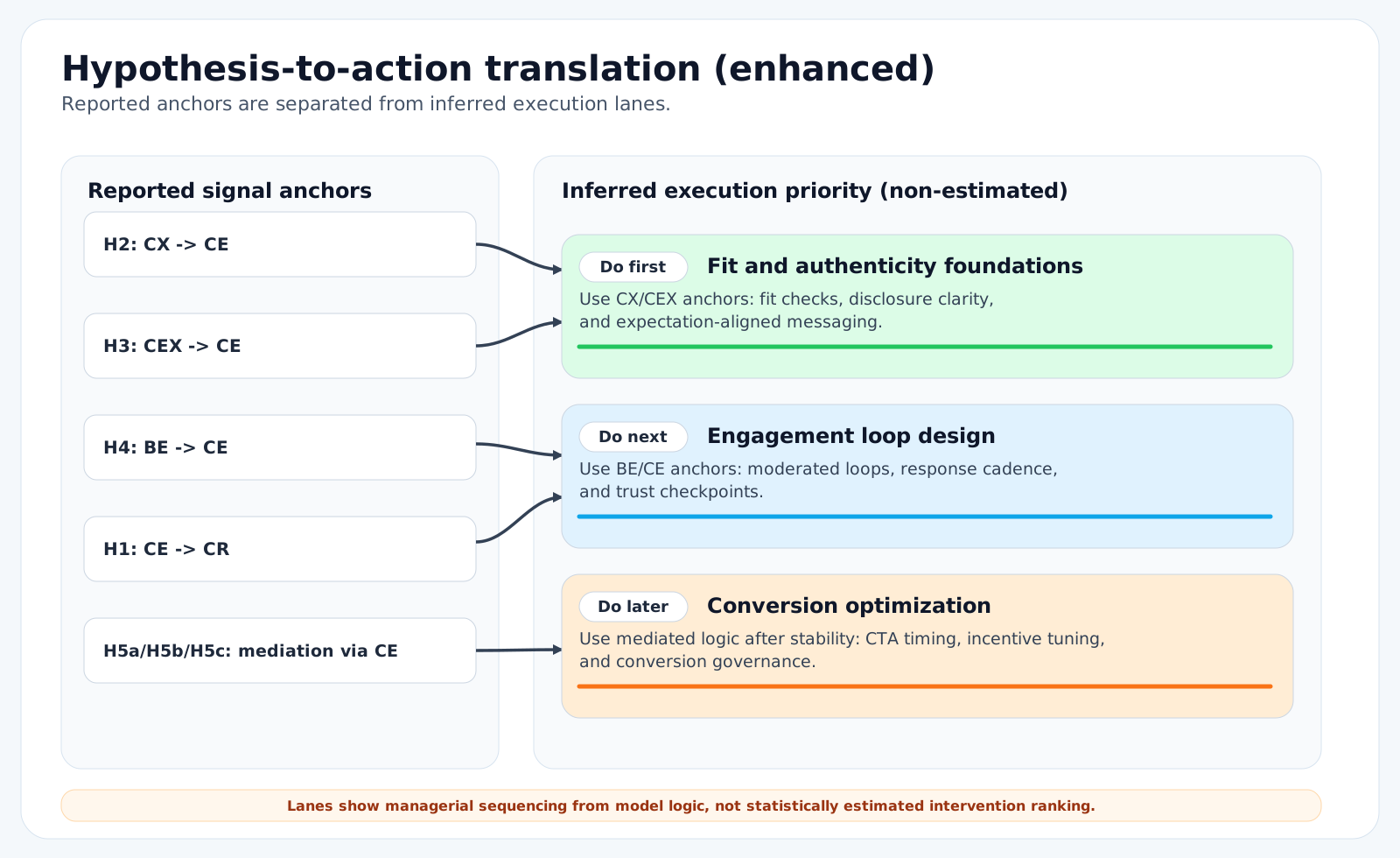
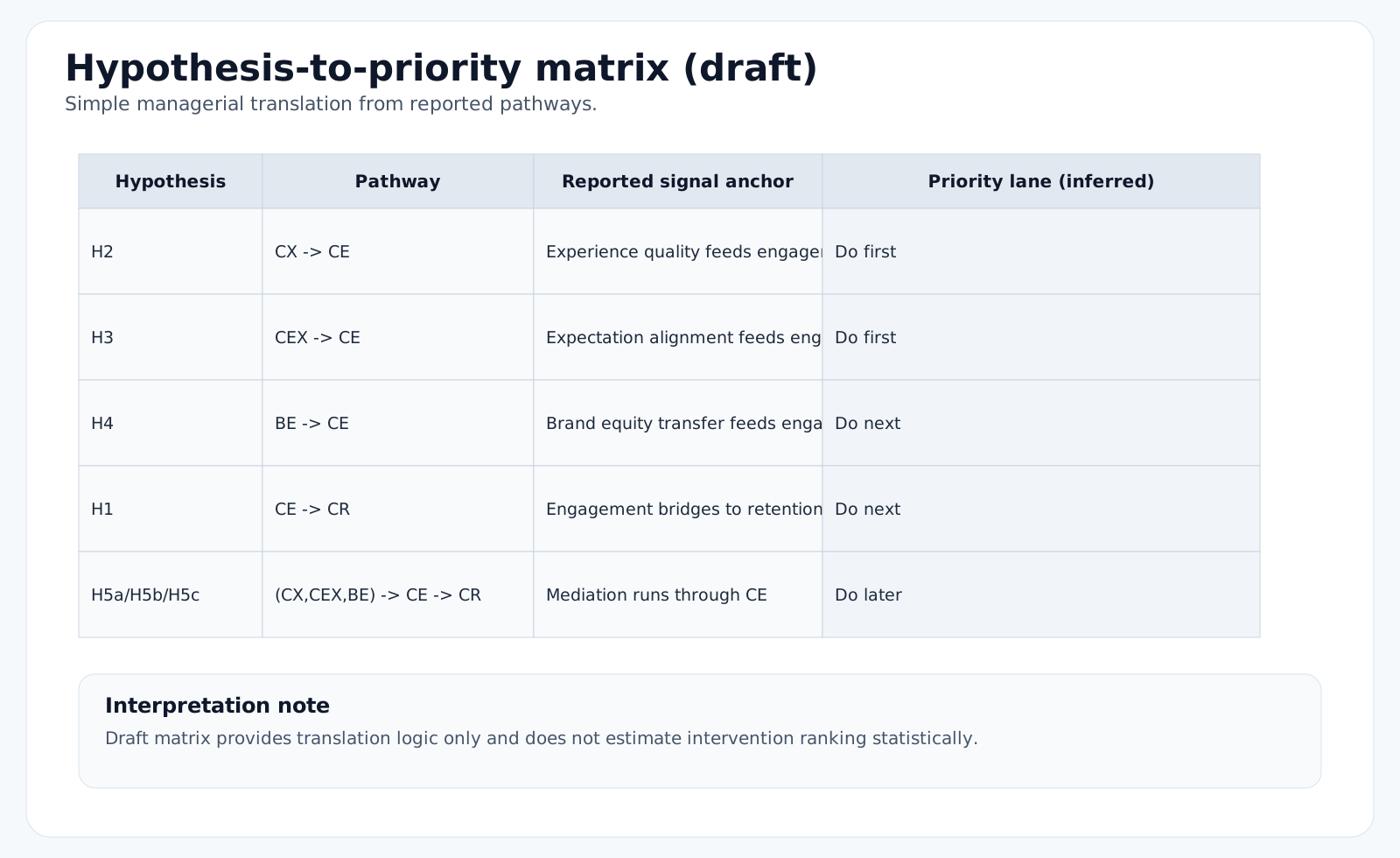
How should the reported structural logic be translated into campaign action order without inventing statistical claims?
CE
CE is framed as interaction depth and quality, not only view count. It functions as the model bridge to retention.
CX
CX captures perceived informational and narrative quality of creator content in the UGC stream.
CEX
CEX reflects whether creator claims and audience expectations match delivered product or service experience.
BE
BE captures transfer of creator credibility and symbolic value to the promoted brand context.
The method follows a cross-sectional online survey protocol with split-sample construct validation and structural testing. The workflow keeps exploration and confirmation separate, then estimates path and mediation logic using SEM.
Cross-sectional online survey targeting active UGC platform users in Vietnam.
Respondents had to be active users who regularly consume influencer-led UGC content and can evaluate campaign experience and trust signals.
Reported as one online collection wave in the manuscript screenshots. Exact calendar dates are not visible in the available screenshot source set.
Exploratory factor analysis on n = 200, followed by CFA and SEM on n = 365, with total sample n = 565.
EFA establishes factor structure, CFA confirms measurement consistency, and SEM tests direct and mediated retention pathways.
Single cross-sectional online wave (exact dates not shown in screenshots).
Overall n = 565.
EFA n = 200; CFA/SEM n = 365.
Measurement validation (EFA/CFA) and structural equation modeling.
CE model R2 = 55%; CR model R2 = 70%.
Construct items for CX, CEX, BE, CE, and CR were developed through the study instrument and validated through split-sample factor procedures before structural path interpretation.
Annotated layout showing hypotheses, sample splits, R2 badges, and qualitative pathway tiers.
Action map aligning reported path anchors with operational sequencing lanes.
The following creators are retained as hybrid evidence cards and are explicitly external explanatory cases, not observations from the survey sample.

Primary construct: CX
Secondary construct: CE
Story sequencing and place-based narrative depth map to stronger content experience, then sustain engagement loops in comments and follow-up episodes.
External explanatory case, not in survey sample.

Primary construct: CEX
Secondary construct: CE
Disclosure and comparison framing support expectation alignment first, then drive engagement through question-answer and product clarification interactions.
External explanatory case, not in survey sample.

Primary construct: BE
Secondary construct: CX
Creator-brand association supports brand equity transfer, while narrative packaging maintains content experience quality during sponsored integration.
External explanatory case, not in survey sample.
Managerial recommendations are derived from reported model logic and constrained qualitative inference. The main implication is to build campaign sequencing around engagement quality as the operational bridge to retention.
Use CE as the operating KPI for campaign diagnostics: improve interaction depth, response quality, and recurring participation before scaling exposure spend.
Deploy disclosure discipline, claim verification, and message-product matching to reduce expectation gaps before conversion-focused pushes.
Formalize creator-brand fit criteria and monitor spillover risk so BE transfer improves retention instead of creating short-cycle hype only.
The visual package combines reported structure with explicit qualitative inference to improve managerial readability. Exact public coefficient tables are not visible in the available screenshot source archive, so this page does not claim numeric path coefficients or p-values.
Paper screenshot source: archived local screenshot evidence set.